Shopify Teardown · khoyfurniture.com
Teardown: KHOY - 5 SEO & AI-search gaps I'd fix first
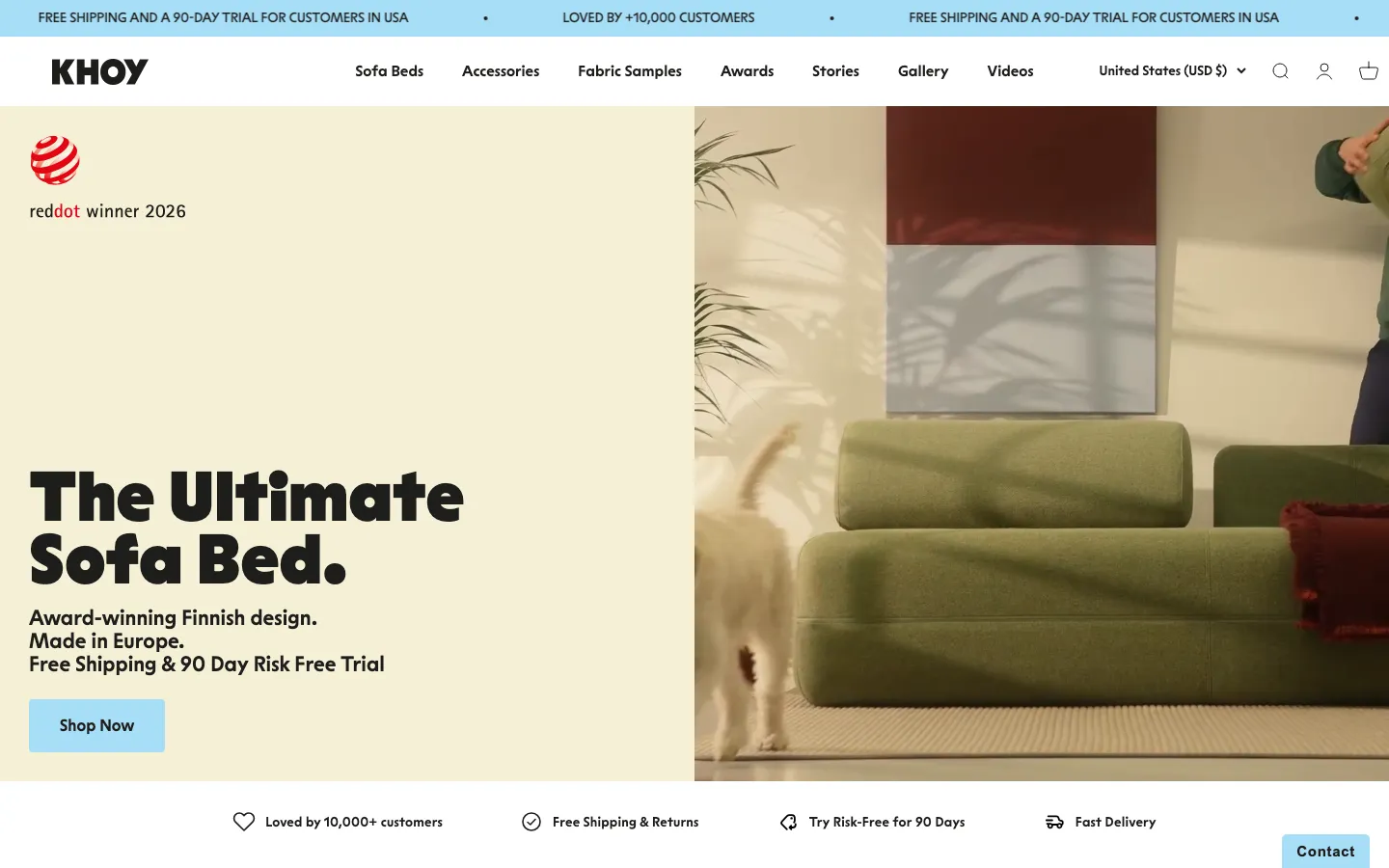
KHOY is doing a lot right: a Red Dot winner in 2026, a King sofa bed with 4.8 stars from 112 reviews, and AI crawlers welcome in robots.txt. So I took an outside-in look at the US store, khoyfurniture.com: 23 pages, the sitemaps and the structured data. No access to their data, just what Google and ChatGPT see.
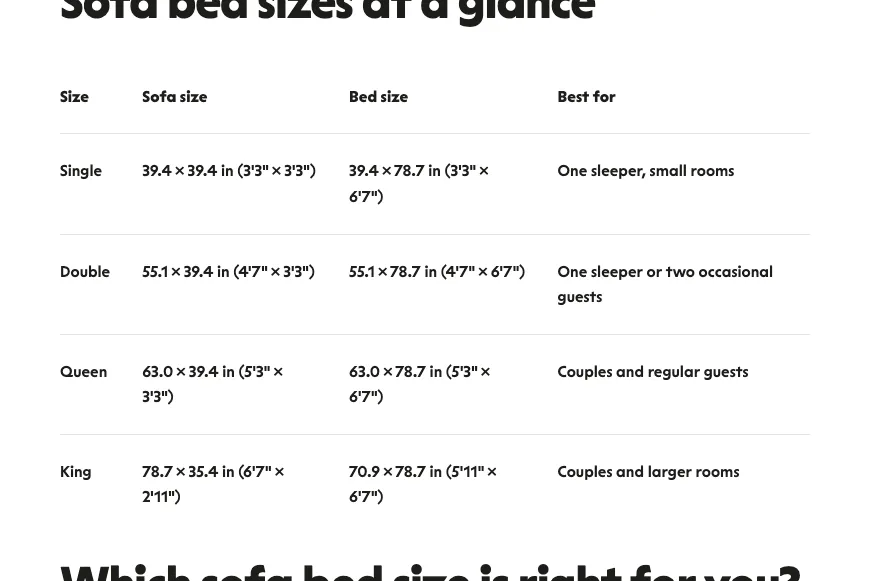
The size guide sells a different King than the product page
What I found
The King product page promises a 76 × 80 in bed. The size guide, the page written to answer exactly this question, says the King opens to 70.9 × 78.7 in. Those numbers match the Daybed King, not the King sofa bed.
The evidence
Why it costs money
On a $2,190 sofa bed, a buyer who measures their room from the guide either doesn't buy or returns a bed that's 5 inches wider than planned. And no product or collection page I checked (0 of 16) links to the guide anyway.
The fix
- Store bed and sofa dimensions in product metafields and render the guide's table from them, so the guide can never drift from the product.
- Add a "Not sure which size?" link to the size guide next to the variant picker on every sofa bed.
hreflang sends Google to pages that return 404
What I found
KHOY runs one Shopify store across two domains, with custom hreflang tags in the theme. The logic appends -usa or -uk to every handle. That works for products, which really have sofa-bed-queen-usa handles. It breaks for collections and blog posts, which don't.
The evidence
<link rel="alternate" hreflang="en-US"
  href="https://www.khoyfurniture.com/collections/beige-sofa-beds-usa">  <!-- 404 -->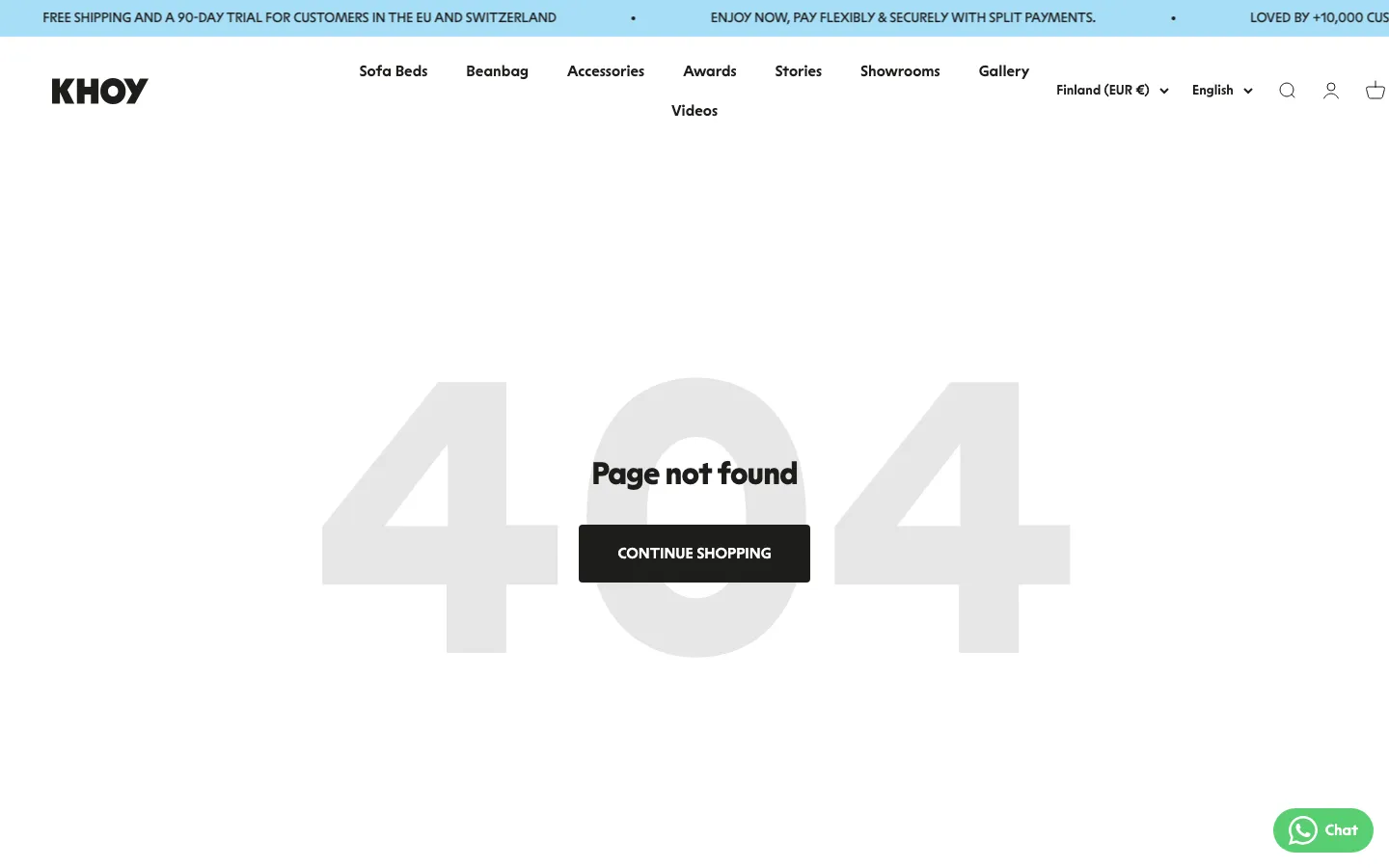
Why it costs money
Google can ignore hreflang annotations that point to broken URLs. Then the US, UK and EU versions of a page compete with each other instead of each ranking in its own market.
The fix
- Only output an alternate when the counterpart exists. A product or collection reference metafield (for example
custom.us_counterpart) maps each resource to its twin. - Build article URLs from
article.urlinstead of concatenating the blog handle a second time.
Product schema points to the other store
What I found
On the US domain, the Product schema and all 9 Offer URLs on the Queen page point to khoycompany.com, the EU store. The canonical says khoyfurniture.com, and that EU URL returned a 404 when I requested it. The markup also has no return policy or shipping details, even though "Free Shipping & Returns" and a 90-day trial sit right on the page. Even llms.txt is generic Shopify boilerplate pointing at the EU domain.
The evidence
"@type": "Product",
"url": "https://www.khoycompany.com/products/sofa-bed-queen-usa",
"offers": [{ "price": 1890.0, "priceCurrency": "USD",
  "url": "https://www.khoycompany.com/products/sofa-bed-queen-usa?variant=…" }]
// hasMerchantReturnPolicy: missing · shippingDetails: missing
Why it costs money
Google's merchant listings and AI shopping answers rely on this data. Mixed domains and missing return info make it harder to show KHOY's best selling points: free returns and a 90-day trial.
The fix
- Build schema URLs from
request.origininstead ofshop.url, which always returns the primary domain. - Add
hasMerchantReturnPolicy(90 days, free) andshippingDetailsto each Offer.
424 images inside one product page
What I found
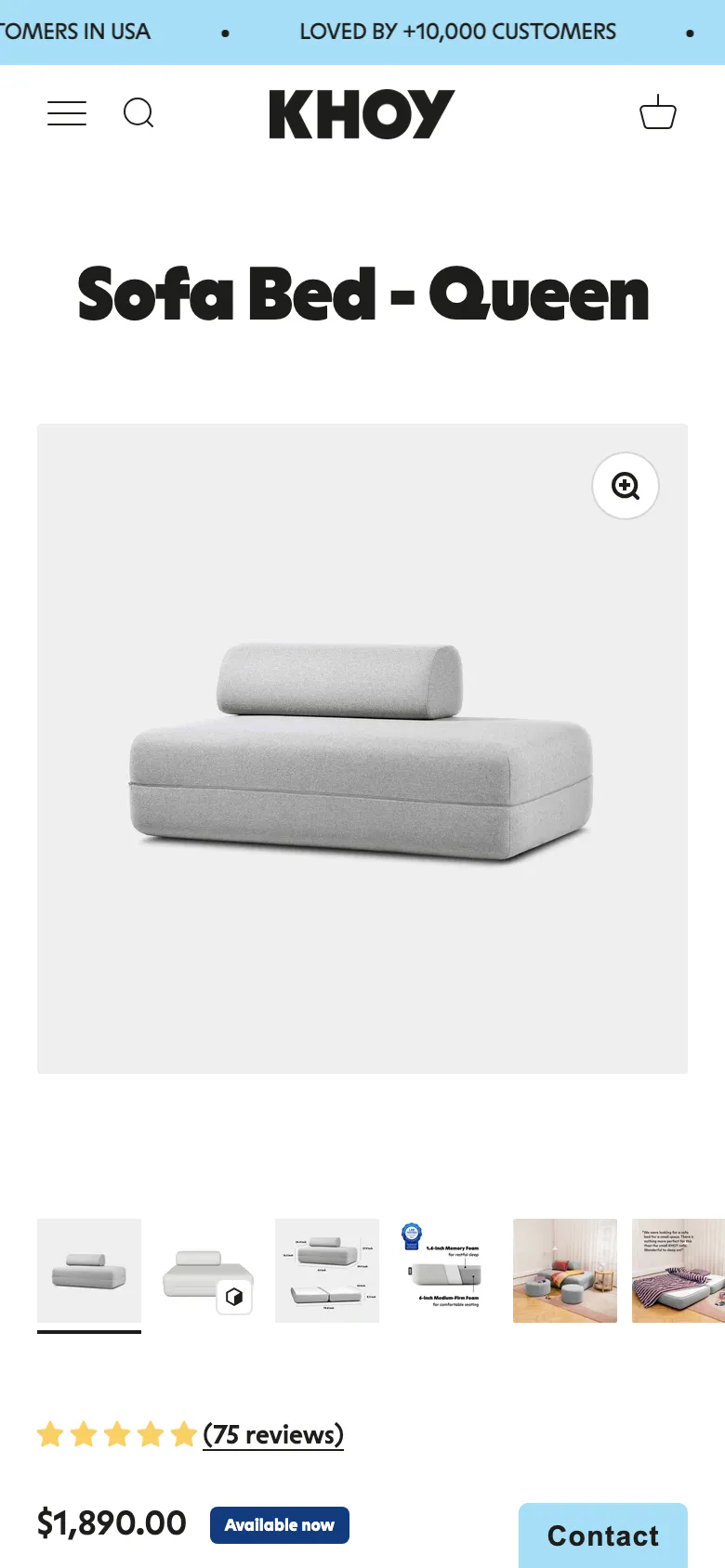
The Queen page's HTML is 1.2 MB with 424 image tags. Shoppers see one photo and a strip of thumbnails. The theme renders every colour's photos, hides 139 of the slides, then repeats them as thumbnails. 347 images have empty alt text and 60 use filter codes like #color_olive green - eco.
The evidence
Why it costs money
Compression shrinks the HTML to 115 KB over the wire, but the phone still parses and lays out every hidden image. That's CPU time, the real bottleneck on mid-range phones.
The fix
- Render only the selected colour's media server-side and fetch the rest on swatch change with the Section Rendering API.
- Move colour grouping out of alt text (a media metafield works) and write real alt text like "KHOY Queen sofa bed in olive green, bed mode".
Empty UK and EU pages in the US index
What I found
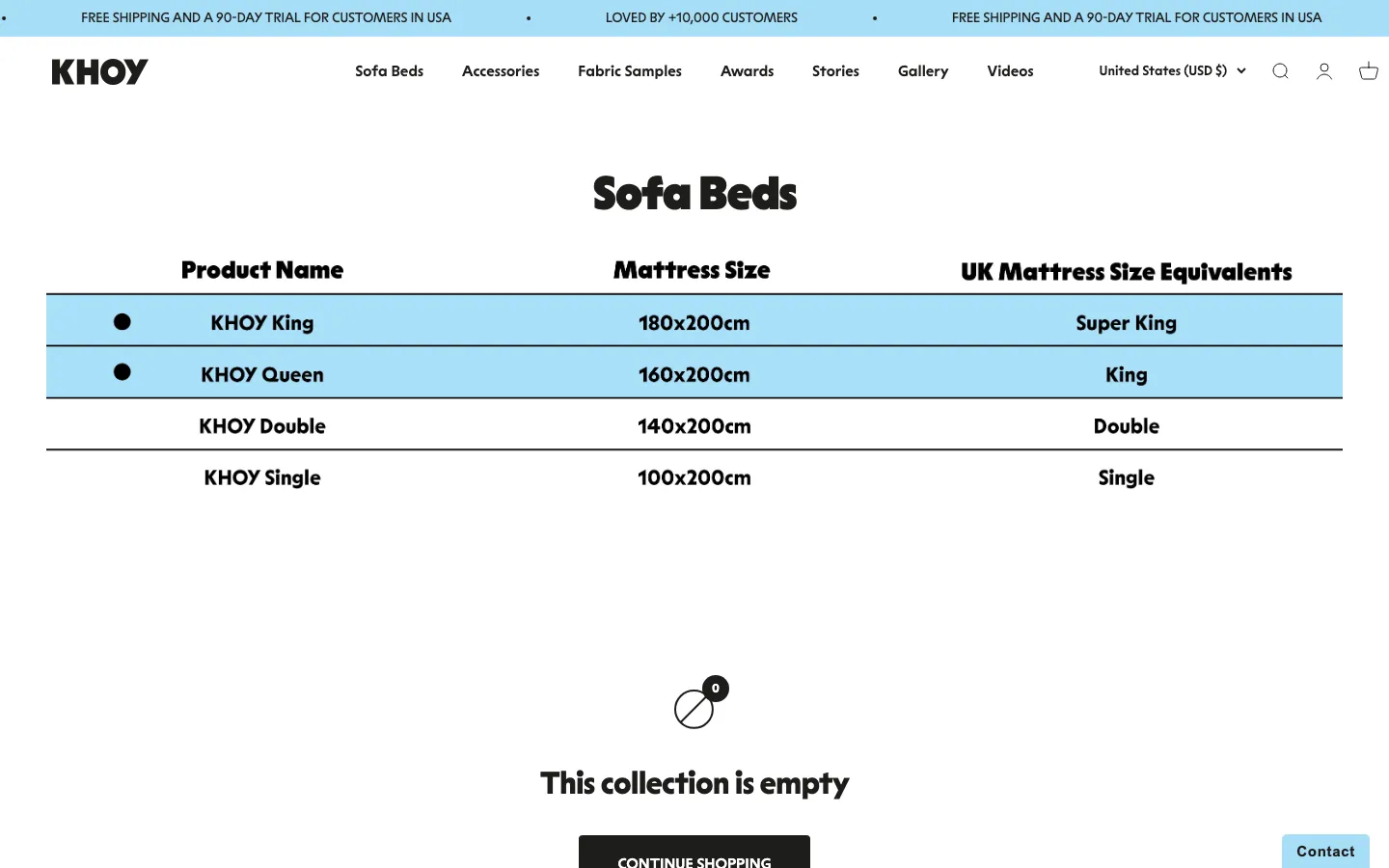
The US sitemap lists 4 collections that show "This collection is empty" to US visitors, a utility collection titled "Non Compare at Price - Products", and 9 EU-only pages, including a German Impressum and six European showrooms.
The evidence
Why it costs money
Every empty or off-market page Google crawls is a page that isn't a sofa bed, and enough of them dilute how the US store is understood.
The fix
- Set the
seo.hiddenmetafield on utility and campaign collections. Shopify then drops them from the sitemap and adds noindex. - For EU-only pages, add a market-aware noindex in
theme.liquidusinglocalization.market.
Quick wins vs. bigger bets
Quick wins · days, not months
- The size guide sells a different King than the product page
- hreflang sends Google to pages that return 404
- Empty UK and EU pages in the US index
Bigger bets · biggest upside
- Product schema points to the other store
- 424 images inside one product page
What I'd do in the first 30 days
- Week 1: Correct the King row, link the size guide from every sofa bed, and hide the empty and utility collections.
- Week 2-3: Rebuild the hreflang logic, switch schema URLs to the current domain and add return and shipping markup. Validate in Search Console.
- Week 4: Slim the product gallery, then measure again on real devices.
None of this touches what makes KHOY good: the product, the reviews and the design. It's template-level work on a store that already has the hard part figured out, and most of it ships in a few weeks.