Shopify Teardown · liquid-iv.com
Teardown: Liquid I.V. - 6 SEO & AI-search gaps I'd fix first
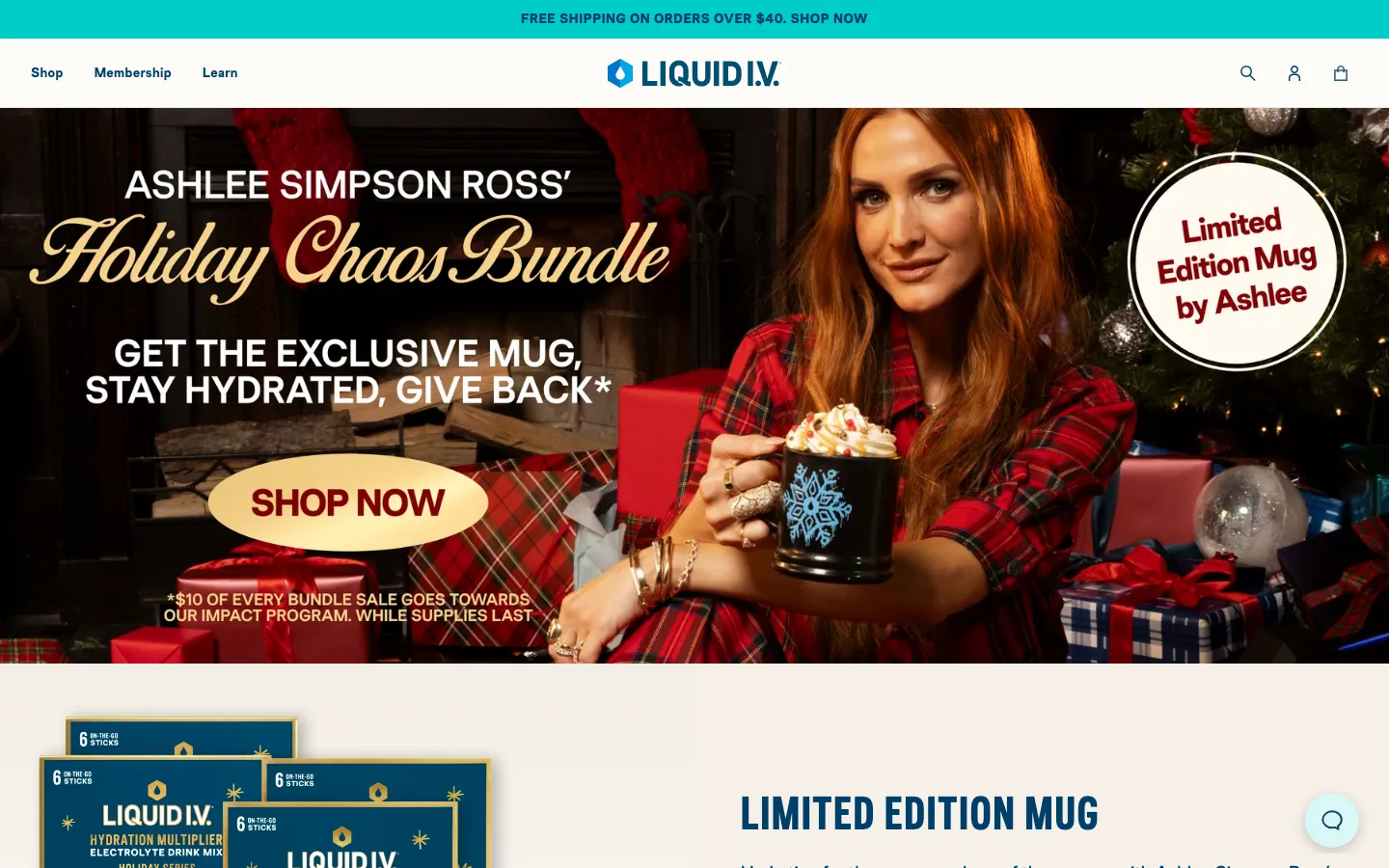
Liquid I.V. runs one of the more serious headless Shopify builds I've looked at: Hydrogen on Oxygen, a hand-written llms.txt with citation preferences, valid structured data on every page I checked and 2,000-word, referenced hydration guides. So the gaps sit in the plumbing between framework, CMS and apps. Outside-in only, no access to their data.
6 locale copies of the entire US store, none with hreflang
What I found
Put /en-ca, /en-gb, /en-au, /en-nz, /en-ie or /en-de in front of any URL and you get a full copy of the US store: same text, same USD prices, its own canonical, index,follow and no hreflang. Nothing on the site links to them, yet each copy tells Google it's the original.
The evidence
<link rel="canonical" href="https://www.liquid-iv.com/en-gb/products/lemon-lime-hydration-multiplier">
<meta name="robots" content="index,follow">
<!-- hreflang tags: 0 -->
Why it costs money
Per Google's guidance, localized pages count as duplicates when the main content isn't translated. Up to six extra copies of every product, collection and article split the signals, and Google may pick the wrong URL to rank.
The fix
- In the locale route, return 404 or a 301 for any prefix that isn't a real market, the way Shopify's Hydrogen markets guide rejects unknown locales.
- If Canada or the UK are coming, give them their own currency first, then add hreflang to pages and sitemaps.
Every page is uncacheable: 2.1 s to first byte on product pages
What I found
Every HTML page I requested comes back oxygen-full-page-cache: uncacheable, sets 6 to 10 cookies (session, A/B-test assignment, analytics) and sends no cache header. So Oxygen renders every page from scratch, for every visitor.
The evidence
set-cookie: __pack=…
set-cookie: amplitude_ab_tests=…
set-cookie: amp_device_id=…
oxygen-full-page-cache: uncacheable
cache-control: (none)
Why it costs money
Real phone users wait 2.1 s for the first byte on Lemon Lime, "poor" by Google's thresholds (good is 0.8 s), and LCP lands at 3.0 s. Shopify's docs list a Set-Cookie header as a reason Oxygen won't cache a page.
The fix
- Move A/B-test assignment and the session cookie off anonymous HTML responses, e.g. set them client-side or on first interaction.
- Send
Oxygen-Cache-Control: publicwithstale-while-revalidateand aVaryheader from product, collection and article routes, and addfetchpriority="high"to the hero image.
5,004 reviews on the page, zero stars in the markup
What I found
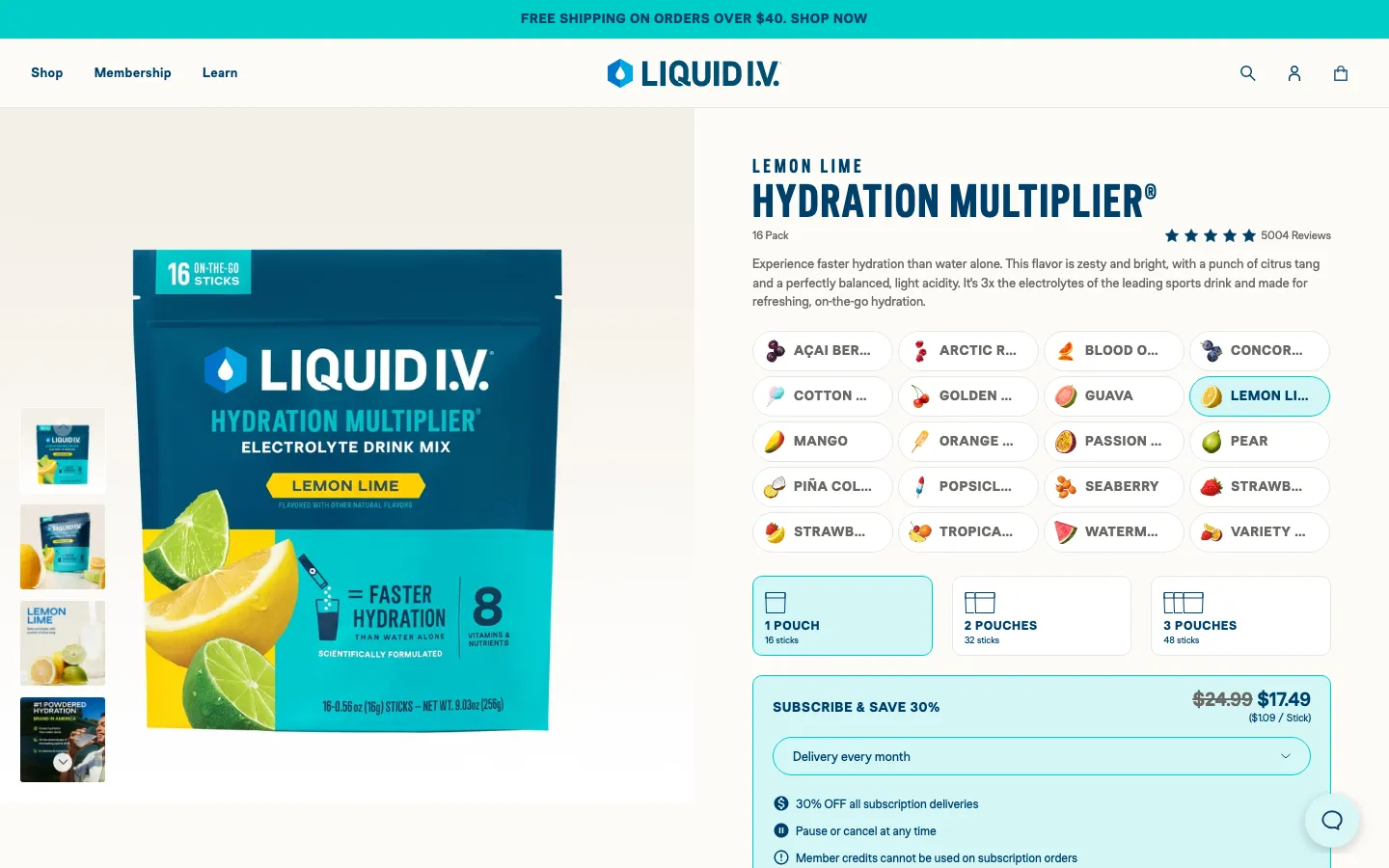
Lemon Lime shows 4.9 stars from 5,004 Yotpo reviews. Its product schema has no aggregateRating and no GTIN, and the brand is "liv-bp-live" on all 5 product pages I checked.
The evidence
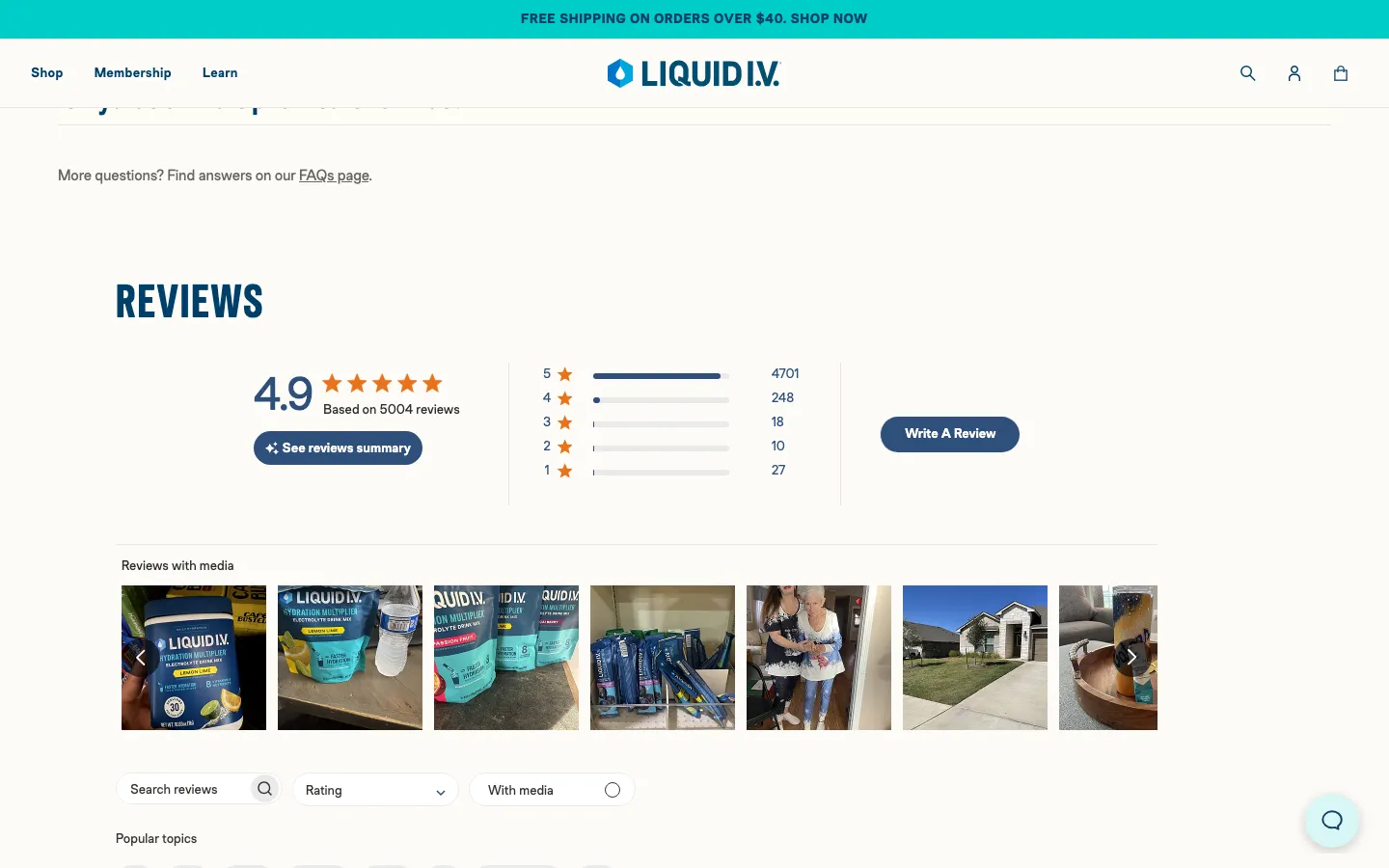
{"@type": "Product", "name": "Lemon Lime Hydration Multiplier®",
 "brand": {"@type": "Brand", "name": "liv-bp-live"},
 "offers": [{"price": 24.99, "priceCurrency": "USD", "sku": "LVP-1602"}]}
// aggregateRating, gtin: missing
Why it costs money
Stars and a correct brand are what a product result competes on in Google and AI shopping answers.
The fix
- Fetch Yotpo's bottom line (average and count) in the product loader and output
aggregateRatingserver-side. - Set the brand to "Liquid I.V." in the Product JSON-LD component and map each variant's barcode to
gtin.
Sodium and potassium only exist as pixels
What I found
The rendered Lemon Lime page has 0 milligram values in its text. The nutrition facts (500 mg sodium, 370 mg potassium, 11 g sugar) live in one image whose alt text is the product name. And llms.txt describes "Cellular Transport Technology", a term on none of the pages I fetched. The site calls it LIV HYDRASCIENCE.
The evidence
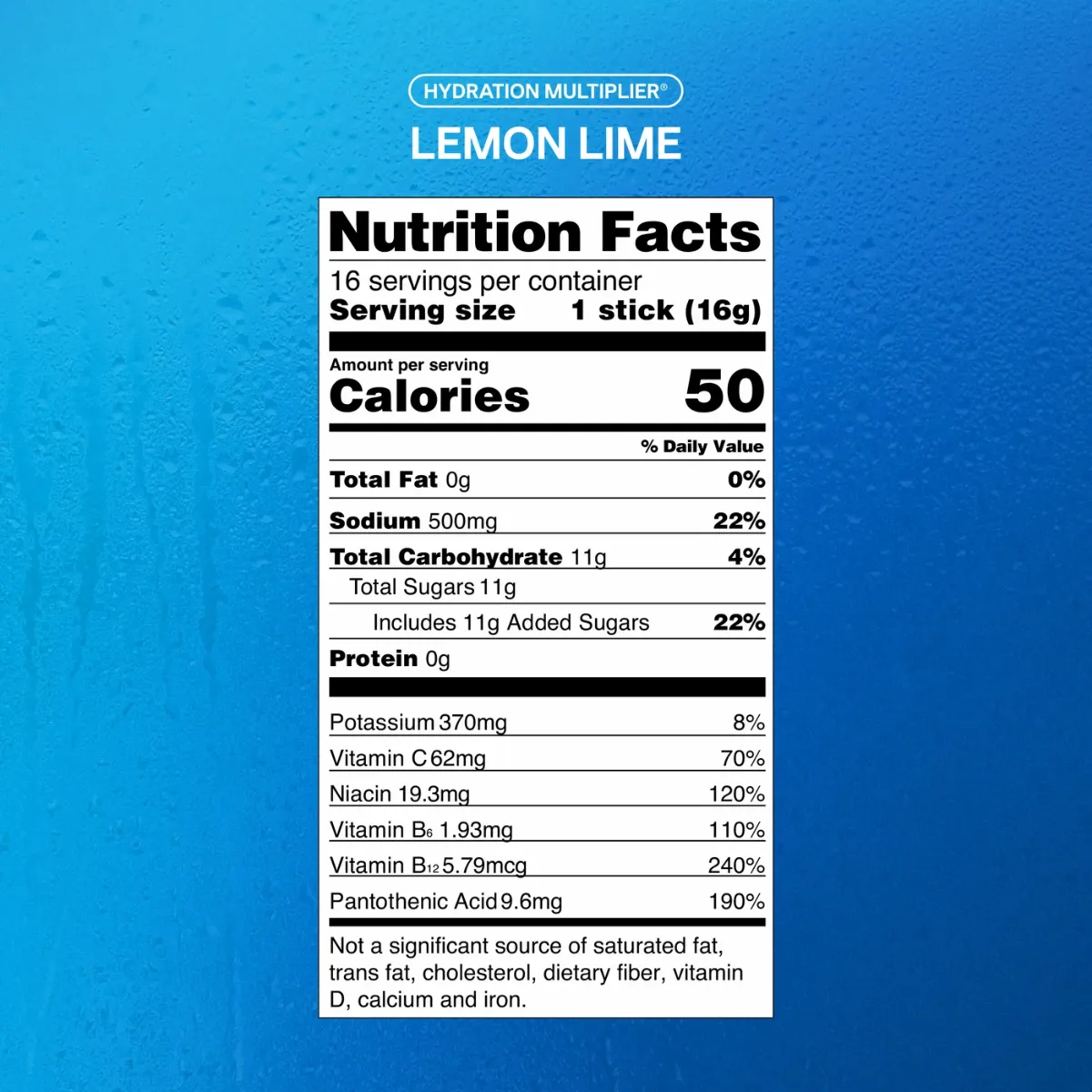
Why it costs money
A question like "how much sodium is in Liquid I.V.?" needs a number in text before Google or an AI assistant can answer it from liquid-iv.com. Today that answer comes from retailers and review sites.
The fix
- Store nutrition facts in product metafields and render them as an HTML table under the gallery, with a descriptive alt text on the label image.
- Use the same name for the technology in llms.txt and on the site.
Feed lists, a demo page and /search in the sitemap
What I found
The sitemaps submit /collections/product-feed-all and /collections/products-applicable-to-all-discounts (both the same 24 products as /collections/shop), /search, /pages/ (a 404) and /pages/demo-page, whose H1 shows nothing but -->. Every one that loads is index,follow.
The evidence
/collections/product-feed-all                      200  "Product Feed All | Liquid I.V."
/collections/products-applicable-to-all-discounts  200  "Products Applicable To All Discounts"
/search                                            200  priority 0.7
/pages/                                            404
/pages/demo-page                                   200  <h1 class="h1-desc">-->
Why it costs money
The sitemap is the shortlist you hand Google. Feed and discount lists compete with the real shop page, and an indexable search page invites thin, endless URLs.
The fix
- Filter the Hydrogen sitemap route by handle, and noindex the search template.
- Return 404 for collections that only exist for feeds and discounts, and delete demo and test pages in Pack.
The homepage is titled just "Liquid I.V.", with no H1
What I found
The homepage <title> and og:title are both just "Liquid I.V.", the server HTML has no H1, and the meta description stops mid-sentence.
The evidence
<title>Liquid I.V.</title>
<meta name="description" content="Clinically demonstrated to hydrate faster than water
  alone, Liquid I.V. is a great-tasting electrolyte drink mix for everyday
  hydration in original and ...">
<!-- h1: none -->
Why it costs money
The brand name will always win branded searches. But the homepage is the strongest page on the domain, and its title tells Google and AI answers nothing about electrolyte drink mix.
The fix
- Use a title like "Liquid I.V. | Electrolyte Drink Mix & Hydration Multiplier".
- Add one H1 to the hero section and write a complete meta description in Pack's SEO fields.
Quick wins vs. bigger bets
Quick wins · days, not months
- 6 locale copies of the entire US store, none with hreflang
- Sodium and potassium only exist as pixels
- Feed lists, a demo page and /search in the sitemap
- The homepage is titled just "Liquid I.V.", with no H1
Bigger bets · biggest upside
- Every page is uncacheable: 2.1 s to first byte on product pages
- 5,004 reviews on the page, zero stars in the markup
What I'd do in the first 30 days
- Week 1: Shut the six locale copies, clean up the sitemaps and fix the homepage title.
- Week 2-3: Add ratings, brand and GTIN to the product schema, and publish nutrition facts as text.
- Week 4: Make anonymous HTML cacheable, then track TTFB and LCP in CrUX.
Liquid I.V. already has the brand, the reviews and the content most competitors would love to have. These fixes let Google and AI answers see all of it, and that's organic revenue the brand doesn't have to buy with ads.